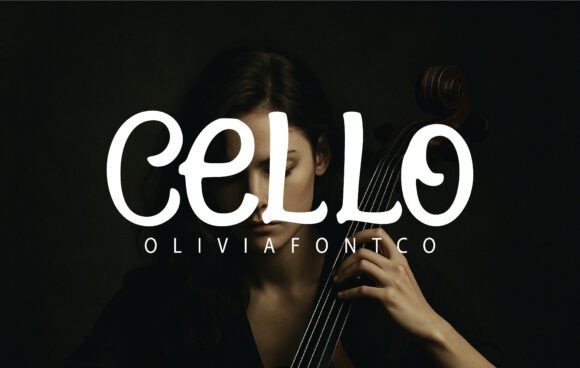
Cello: A Bold and Artistic Display Font for Your Handmade Products
If you're a crafter, Etsy seller, or small shop owner who creates physical products like labels, stickers, invitations, signs, or SVG downloads, you know that the right typeface can make or break a design. Cello is a captivating display font that brings the depth and emotion of classical music into your projects. Its soft curves and playful rhythm give every word a handcrafted, artistic feel while remaining highly readable. In this article, I'll share how I've used Cello in my own handmade products and why it deserves a spot in your font library.
Cello for Wedding Invitations and Elegant Stationery
Because Cello is a bold yet graceful display font, it works beautifully for wedding invitation suites and formal stationery. I recently used Cello for the couple's names on a set of rustic-chic wedding invitations, and the result was stunning. The font's soft curves and musical flow add an elegant, romantic touch to names and titles. For the body text, I paired Cello with a clean sans serif font like Lato or Montserrat to keep the details readable. Cello is best for short phrases—like "Together with their families" or "Mr. & Mrs."—where its artistic shape can shine without overwhelming the page. It's also perfect for save-the-date cards, place cards, and menu cards. Wedding stationery designers will appreciate how Cello adds a layer of sophistication that feels both timeless and fresh.
Cello on Stickers, Labels, and Product Packaging
When I design product labels for my handmade candles and bath products, I need a font that stands out on the shelf but still fits within small spaces. Cello, as a display font, delivers that balance. Its bold strokes remain legible even when printed at 1 to 2 inches tall, making it ideal for boutique tags, jar labels, and sticker sheets. For example, I created "Lavender & Honey" candle labels using Cello for the main product name, then added a subtle serif for the scent notes. The curved letters gave the packaging a warm, artisan feel that my customers love. If you're using a cutting machine like Cricut or Silhouette, test Cello at your intended size first—its moderate weight cuts cleanly in vinyl or cardstock, but you'll want to avoid overly intricate alternates for very small lettering. The font's rhythmic shape also works well for soap labels, lip balm wraps, and gift tags. Small shop owners looking for a distinctive brand voice will find Cello adds perceived value to every product.
Cello for Craft Signs, Wall Art, and Home Decor
As a maker of farmhouse-style signs and printable wall art, I'm always on the lookout for display fonts that feel handcrafted without being fussy. Cello hits that sweet spot. I used it for a "Gather" sign on a reclaimed wood plank, and the soft curves gave the word a welcoming, musical quality. For smaller signs like "Hello" or "Bless this Home," Cello creates a focal point that draws the eye. It's also ideal for quote posters where you want the main title to carry emotional weight. Because Cello's letters have a playful rhythm, they work well on gallery wall prints, canvas art, and even tea towels. If you sell digital templates on Etsy or Creative Market, consider offering a Cello-based quote design—it’s the kind of typeface that customers will search for by name. The font's boldness also makes it suitable for outdoor signs when paired with weatherproof materials, as long as you keep the text size large enough to maintain readability from a distance.
Pairing Cello with Complementary Fonts
Like any great display font, Cello shines when paired with a simpler counterpart. I've found that a clean sans serif, such as Poppins or Roboto, provides an excellent contrast to Cello's artistic curves. For instance, in a wedding invitation, I set the couple's names in Cello and the event details in a light sans serif—that combination feels both elegant and modern. Alternatively, pairing Cello with a classic serif like Playfair Display can create a luxurious, high-end look for product packaging or branding. If you want a more whimsical feel, try matching Cello with a handwritten script font; just be careful not to overwhelm the design with too many decorative elements. The key is to let Cello be the star for headlines and short statements, while the supporting font carries the body copy. For my own shop, I use Cello for product line names and a simple sans serif for ingredient lists or care instructions. This pairing keeps my brand consistent and customer-friendly. When you include font pairing suggestions in your product listings, buyers can see how Cello will fit into their own projects.
Cello in Digital Downloads and SVG Designs
If you create digital printables, planners, or SVG cut files, Cello is a versatile addition to your toolkit. Its bold, clear shapes translate well to SVG paths, making it a breeze to cut on Cricut or Silhouette machines. I've used Cello to design "Love" and "Family" word art for home decor, and the curves cut smoothly in vinyl and cardstock. For planning stickers and journaling cards, Cello works great for headers like "Weekly Goals" or "Gratitude." Since it's a display font, keep it to short, impactful words or phrases—long sentences may lose the playful rhythm. Check the font file for included alternates, ligatures, and swashes; these extras can add a custom, handmade feel without extra design work. Many premium fonts like Cello come in OTF and TTF formats, which are compatible with all major design software and cutting platforms. If you sell digital templates, consider creating a variety of designs that showcase Cello's range, from elegant to playful, to appeal to a wide customer base.
Commercial Licensing for Cello in Your Products
Before you start using Cello in your shop, be sure to review the commercial license that comes with the font. Display fonts used for physical products—like candles, mugs, shirts, signs, and packaging—typically require a license that covers commercial use. The same goes for digital products such as printable templates, SVG designs, or social media graphics you sell to clients. Many font foundries offer a standard commercial license for small businesses, but if you plan to sell a high volume of products or offer the font as part of a design asset bundle, you may need an extended license. Licensing protects your hard work and ensures the creator of Cello can continue making beautiful typefaces. I always buy commercial licenses for my fonts and keep a record of the purchase in case of platform verification. For Cello, make sure the license matches your intended use—whether that's for your own handmade goods, client projects, or digital downloads. Being upfront with licensing in your product descriptions also builds trust with your customers.
I hope this gives you a clear picture of how Cello can elevate your handmade creations. Its combination of bold artistry and practical readability makes it a font I reach for again and again, whether I'm designing a wedding invitation, a candle label, or a rustic sign. Try Cello in your next project and watch your products come to life with rhythm and emotion.